
Camping tents, shelters & gazebos
Tents are a separate skill set from umbrellas. We handle them through partner production rather than claiming them as a core line, and we will tell you plainly which factory is making your item.
Custom orders only. Nothing here is held in stock or sold as-is — the photographs are reference pictures showing styles the cluster can make, not other customers' designs.
What to fix before you ask for a price
Tents are quoted against a specification, not against a picture. The five rows below are the ones that decide both the price and whether the product passes the market it is going to.
| Item | Typical | Notes |
|---|---|---|
| Capacity | 2–8 person | Cabin tents give standing height; dome tents pack smaller |
| Flysheet | Polyester or Oxford, PU coated | Specify the water column rating you need — see the table below |
| Inner | Breathable polyester with mesh panels | Mesh ratio affects ventilation and condensation |
| Seams | Taped or seam-sealed options | Seam treatment is a common cost and quality divider |
| Poles | Fiberglass or steel | Aluminium alloys on higher grades — 7001-T6 and 6061 bend rather than snap |
| Groundsheet | Sewn-in or loose | Sewn-in is faster to pitch; loose is easier to dry and replace |
| Printing | Screen print, heat transfer, digital print on flysheet and bags | The peg bag and carry bag are usually where the brand shows |
| MOQ | Confirmed per model | Higher for tents than for umbrellas, and higher again for new frames |
| Lead time | 30–45 days after sample approval | Longer for new models requiring tooling |
Typical values for standard models. Your quotation and pro forma invoice define the order.
Reference configurations
Seven camping builds from partner production. Shape and standing height drive retail appeal; fabric coating and seam treatment drive the price.

Dome tent — packs smaller than a cabin at the same capacity

Green dome — the colourway most rental fleets standardise on
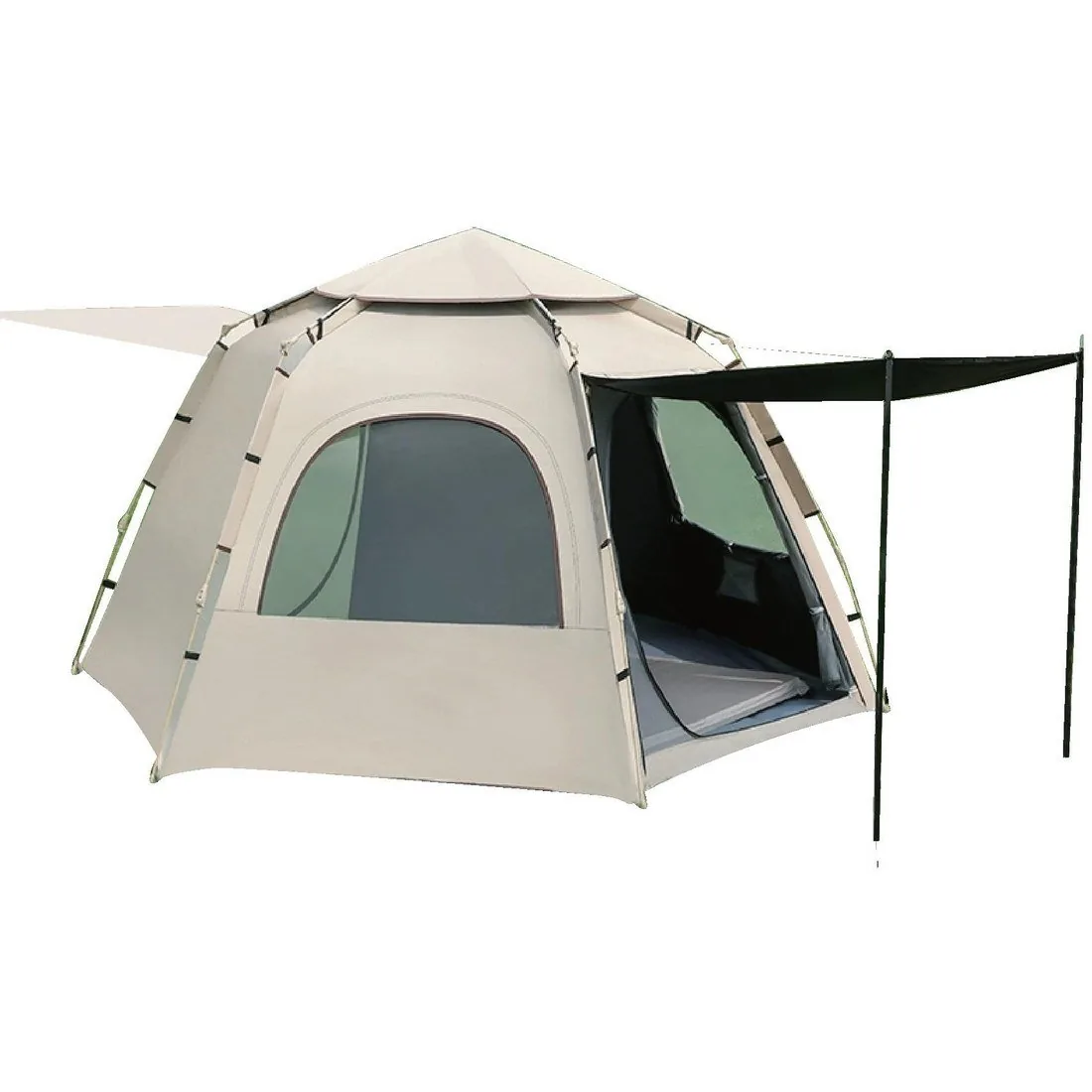
Cabin with awning — standing height is what sells it at retail

Blue dome — the default colourway in most camping programmes

Colour-blocked flysheet — two panels, usually still one fabric

Cabin shape — check the packed length against your carton before you order
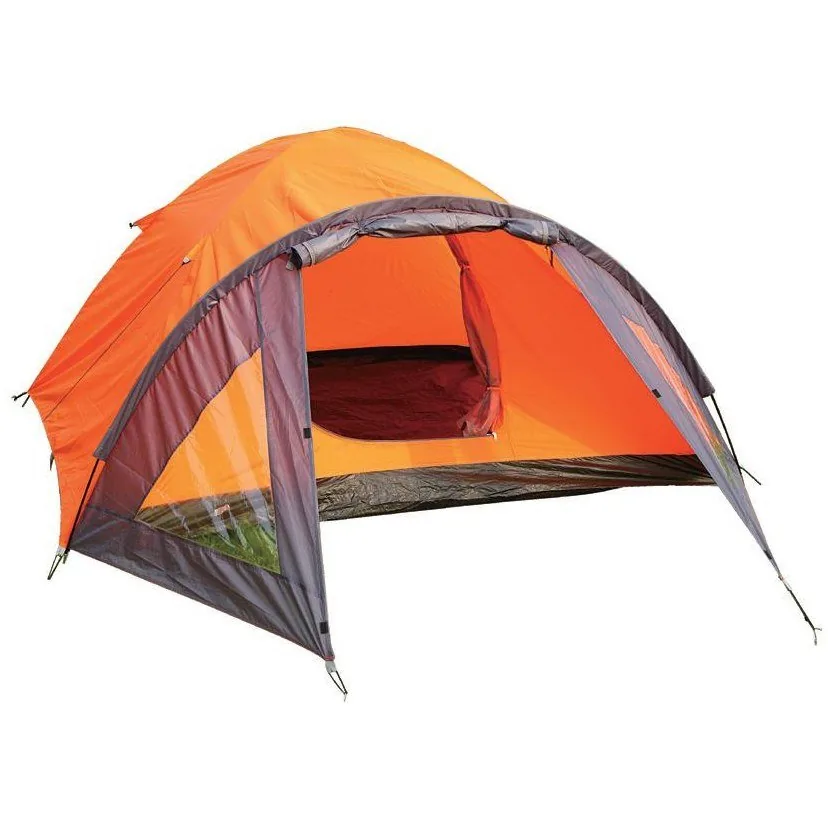
High-visibility colourway — favoured by festival and rental buyers
Event canopies and garden gazebos
Two quite different products share this section. Pop-up gazebos are steel-frame event kit; curtained gazebos are garden retail. They do not share a supply chain, so tell us which one you mean.

Pop-up gazebo — the event and hospitality workhorse
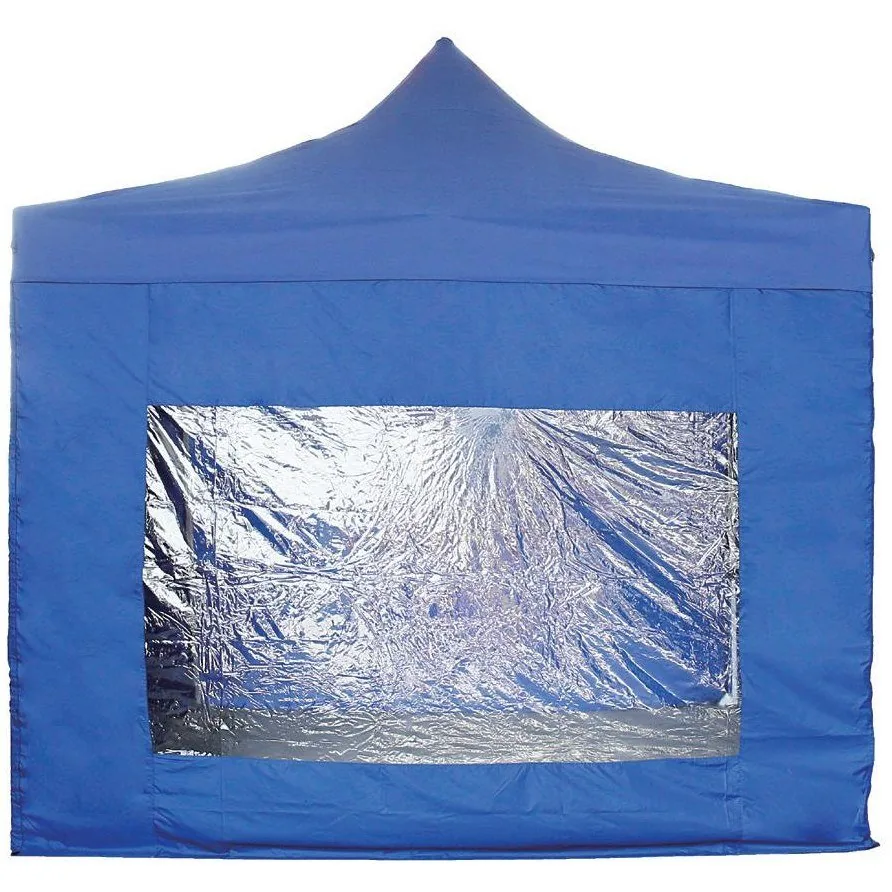
Sidewall with window — turns a gazebo into a wet-weather stand

Open sidewall — same frame, different use case
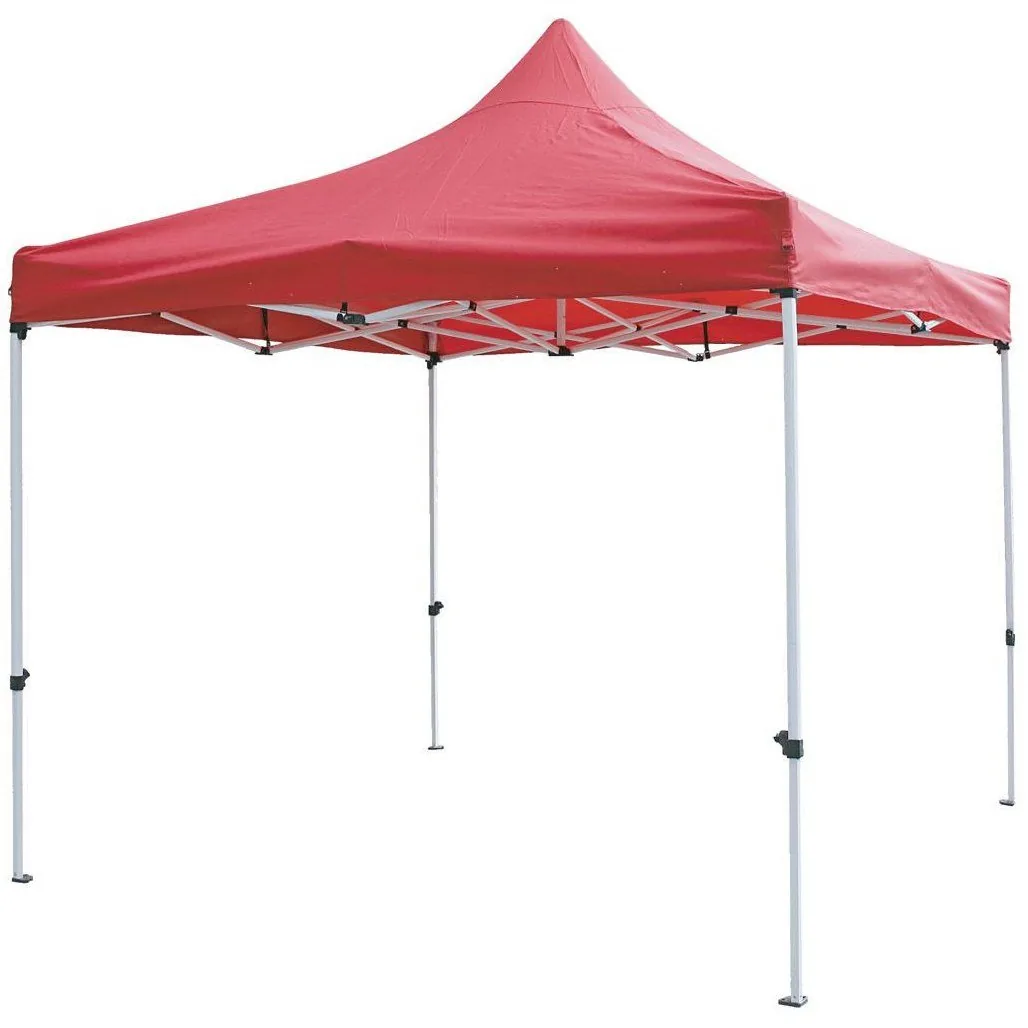
Steel-frame gazebo — heavier, but survives repeated set-up

Red canopy — the colour most brand programmes print on
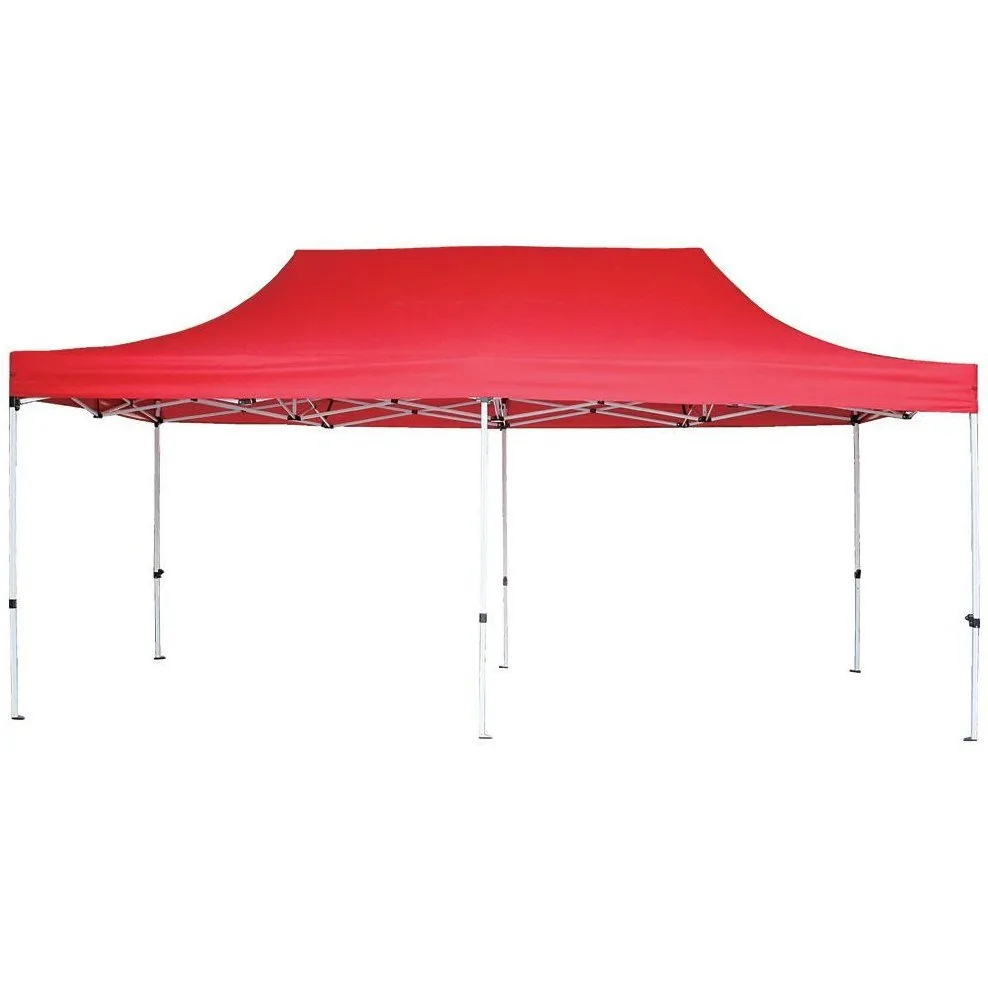
Wide view — check the footprint against your stand size

Striped gazebo with curtains — a garden-retail format, not an event one
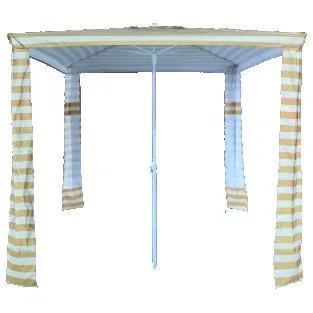
Curtained gazebo — packed volume is the freight driver here
Standards that apply to tents and shelters
Tents carry requirements that umbrellas do not — flammability, wind stability and seam strength. These are the standards buyers reference, and they differ by market.
| Standard | Market | What it covers |
|---|---|---|
| CPAI-84 | North America | Flammability of tentage fabrics — burn rate and self-extinguishing behaviour. Its own labelling language states that tentage is not fireproof |
| EN ISO 5912 | Europe / international | Stability in wind, water resistance of the flysheet, seam strength, tear strength and ventilation requirements |
| ISO 811 | International | Hydrostatic head — the water column test behind every waterproof rating |
| GB/T 33281 | China | Tent safety requirements, broadly aligned with the ISO approach |
| GBZ 27735-2022 | China | Tent poles — bending strength and corrosion resistance |
Referenced standards as published. Confirm the applicable edition with your laboratory.
What the water column number really means
Hydrostatic head is the height of a water column the fabric withstands before water penetrates. The bands translate into use as follows:
| Rating | Real-world meaning |
|---|---|
| Below 1,000 mm | Sun shelters and light drizzle. Leaks in sustained rain |
| 1,500 – 3,000 mm | Standard three-season. Handles average rainfall |
| 3,000 – 5,000 mm | Wet climates and extended trips |
| 5,000 – 10,000 mm and above | Expedition grade and groundsheets |
ISO 5912 states requirements in pascals; roughly 1 mm equals 9.81 Pa, so a 30,000 Pa requirement is about 3,000 mm.
Fabric and pole choices that decide the price
- Polyester — holds shape when wet, does not sag, dries faster and resists UV degradation better over full seasons
- Nylon — higher tear strength at equal denier, but absorbs water, gains weight and sags, so guylines need re-tensioning after rain
- PU coating — economical and allows heat-welded taped seams
- Silicone — more durable, more UV resistant, increases tear strength, but needs specialised seam treatment
- Poles — fiberglass is inexpensive but can splinter under load; aluminium alloys such as 7001-T6 and 6061 bend rather than snap
Every needle hole is a leak path. Factory tape-sealed seams are the norm above entry level, and a high hydrostatic head on unsealed fabric still produces a wet tent.
CPAI-84 is voluntary at federal level in the United States, but most retail channels, campgrounds and rental operations treat it as mandatory. Ask your customer which they require — and note that compliant products still carry a warning that tentage is not fireproof.
Where these are actually made
Being honest about this saves you time: tents largely come from Zhejiang's outdoor goods areas rather than from the umbrella cluster. We coordinate both and ship them together from Ningbo.
- Camping tents and shelters — partner production in Zhejiang's outdoor goods areas
- Beach umbrellas and sun tents — Shangyu and the surrounding umbrella cluster, on the beach page
- Combined shipments — consolidated for loading at Ningbo
A partner who claims to make everything in one factory is usually a trading company with less control than it implies. Naming where each item is made lets you audit it.

What actually happens on a tent line
A tent is cut, machined and sewn with different equipment and different tolerances than an umbrella. That is why it comes from a different workshop, and why honest lead times here are longer than they look on paper.
- Panel cutting — coated fabric is laid and cut to nested patterns. Pattern and print alignment is fixed at this table, and cannot be corrected afterwards.
- Frame machining — poles and joints are cut, drilled and formed, then dry-assembled for fit before packing.
- Seam sealing — taped or sealed seams. This step decides whether a hydrostatic head figure means anything once the tent is pitched in rain.
- Assembly and pack — flysheet, inner, poles, pegs and bag are counted, assembled and packed to your carton specification.
Repeatable specification is what shortens tent lead times. A run repeated on the same patterns, fabric lot and hardware moves faster than a one-off, whatever the factory says at quotation.

Panel cutting — the step that fixes every dimension that follows
Tent category questions
Can you support UPF 50+ or water column claims?
We can source fabric specified to those levels, and testing can be arranged through a third-party laboratory at cost. Ask for it at quotation stage so the fabric and the documentation are ordered together.
Do you develop new models?
Yes. Bring a sketch, a reference product or a target specification. New frames and new pole sets carry a tooling charge, which we will quote as a separate line so you can see it.
Can tents ship with umbrellas in one container?
Yes. Consolidation is one of the practical advantages of working with a partner rather than placing separate orders with separate factories.
What about spare parts and repairs?
Poles, pegs, flysheets and bags can be ordered separately for most models. Ask at quotation stage if after-sales support is part of your programme.
Get an outdoor products quote
Tell us the product type, target market and volume. We will confirm where it would be made and what the sampling path looks like.