Born in Songxia, February 1994 — into a street of sewing machines
Shadopia did not start in an office. It started at a sewing machine in Songxia, the town in Zhejiang that makes most of the world's umbrellas and a large share of its tents. I was born there in February 1994, into a family for whom this trade was not an industry — it was the street we lived on.
My grandmother made umbrellas at home. Before I was tall enough to reach a machine of my own, I sat beside hers threading needles and closing panels by hand. The sound of sewing machines is my earliest memory of work.
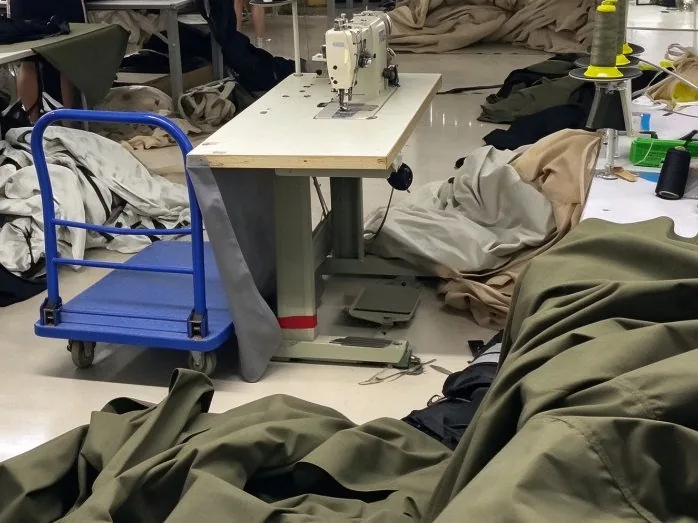
My mother and my great-aunt cut tent fabric. My aunts, my cousin and half of our neighbours sat at sewing machines, stitching canopies and tents season after season. In Songxia none of this is unusual — the cluster runs on families like these.
I worked in umbrella factories myself for several years, on the production floor rather than behind a desk. That is where I learned what separates a canopy that survives three seasons from one that fails in the first: the stitch density at the rib point, whether the pole finish is anodised or only painted, whether the fabric was solution-dyed or piece-dyed. None of it is visible in a spec sheet. All of it is visible if you have stood at the machine.
Today Shadopia works from the other side of the table — matching international buyers to the factories in this cluster that can build their item properly, and keeping the specification honest from quotation to loading. The name comes from shade and utopia: the place you actually want to be under the sun. For an outdoor shade company, that is the whole product.
I learned this trade at my grandmother's sewing machine. Every factory we quote is held to the standard she worked to.

Canopy panels under a sewing machine — the work I grew up in, and the work we now check on your behalf.